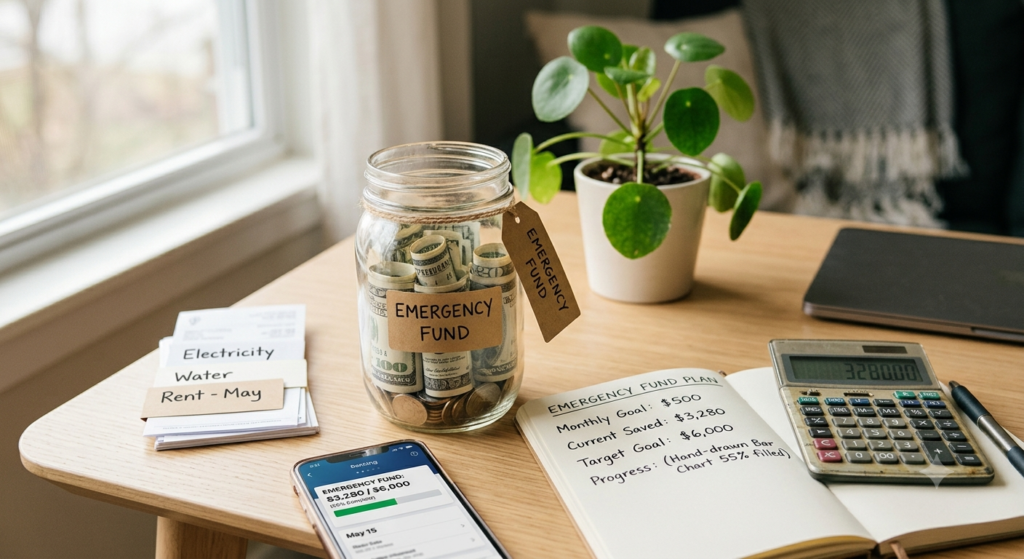

Life rarely goes exactly as planned. A car breaks down. You lose your job. A medical bill shows up without warning. These situations can put pressure on your finances, especially if you don’t have money set aside.
That’s where an emergency fund helps.
An emergency fund is money you save for unexpected expenses. It gives you time to deal with problems without relying on credit cards, personal loans, or borrowing from family.
But one question comes up again and again:
How much emergency savings do you actually need?
The answer depends on your income, expenses, and how stable your job is. In this guide, you’ll learn how to calculate the right amount, where to keep your money, and how to build your fund even if you’re starting with very little.
What Is an Emergency Fund?
An emergency fund is money that you keep only for real emergencies. It’s a core part of building financial resiliency the ability to absorb unexpected costs without going into debt.
It’s not for vacations, shopping, or planned expenses. It’s there to cover costs you didn’t expect and couldn’t avoid.
Some common examples include:
- Job loss
- Medical emergencies
- Major car repairs
- Urgent home repairs
- Emergency travel
- Unexpected family expenses
The main purpose is simple. It helps you handle financial problems without going into debt.
Why an Emergency Fund Matters
Many people live paycheck to paycheck. Even a small unexpected bill can become a major problem.
Having emergency savings can help you:
- Pay bills during difficult times
- Avoid high-interest debt
- Reduce financial stress
- Give yourself time to find a new job
- Protect your long-term savings and investments
An emergency fund doesn’t stop bad things from happening. But it gives you more options when they do.
How Much Emergency Fund Do You Really Need?
There isn’t one number that works for everyone.
The amount depends on your monthly expenses and your personal situation.
A common guideline is:
| Situation | Recommended Emergency Fund |
|---|---|
| Stable full-time job | 3 months of living expenses |
| Freelancers or self-employed | 6 to 12 months |
| Single income household | 6 months or more |
| High job uncertainty | 6 to 9 months |
| Retirees | 6 to 12 months, depending on income sources |
The goal is to save enough money to cover your essential monthly expenses.
These include:
- Rent or mortgage
- Utilities
- Groceries
- Insurance
- Transportation
- Minimum loan payments
- Phone and internet
Leave out optional spending like entertainment, vacations, or luxury purchases.
How to Calculate Your Emergency Fund
Start by calculating your monthly essential expenses.
Here’s an example.
| Monthly Expense | Amount |
|---|---|
| Rent | $1,400 |
| Utilities | $250 |
| Groceries | $500 |
| Transportation | $300 |
| Insurance | $250 |
| Loan Payments | $300 |
| Total Monthly Expenses | $3,000 |
If your monthly expenses are $3,000, your emergency fund goal could look like this.
| Savings Goal | Amount |
|---|---|
| 3 months | $9,000 |
| 6 months | $18,000 |
| 9 months | $27,000 |
| 12 months | $36,000 |
This gives you a clear target instead of guessing.
Should Everyone Save Six Months of Expenses?
Not always.
Saving six months of expenses is a good long-term goal. But trying to reach that amount immediately can feel impossible.
It’s better to build your emergency fund in stages.
Stage 1: Save $500
This can cover many small emergencies like minor car repairs or medical bills.
Stage 2: Save One Month of Expenses
This gives you breathing room if an unexpected expense appears.
Stage 3: Save Three to Six Months
Once you’ve reached this point, you’ll have stronger financial protection.
Building savings step by step is more realistic than waiting until you can save a large amount all at once.
Factors That Affect How Much You Need
Your emergency fund should match your situation.
Here are some things to consider.
Job Stability
If your job is secure and your income is predictable, three months of expenses may be enough.
If layoffs are common in your industry, saving more makes sense.
Income Type
Freelancers, contractors, and business owners usually have less predictable income.
Many financial planners suggest keeping six to twelve months of expenses.
Number of Dependents
If your family depends on your income, a larger emergency fund offers more protection.
Health
If you have ongoing medical expenses or high insurance deductibles, you may want to save extra.
Debt
If you carry high monthly loan payments, losing income becomes more difficult.
A larger emergency fund can reduce that risk.
Where Should You Keep Your Emergency Fund?
Your emergency savings should be easy to access but separate from your everyday spending account.
Good options include:
- High-yield savings account
- Money market account
- Short-term cash management account
Avoid keeping emergency savings in investments like stocks.
The market can fall just when you need the money.
The goal isn’t to earn high returns.
The goal is to have your money available when you need it.
How to Build an Emergency Fund Faster
Saving can feel slow at first. But small steps add up.
Here are a few ideas.
Set Up Automatic Transfers
Move money into savings every payday.
Even small amounts build over time.
Save Windfalls
Use tax refunds, bonuses, or gifts to increase your emergency fund.
Cut One Monthly Expense
Cancel a subscription you don’t use or reduce one spending category.
Put the savings directly into your emergency account.
Increase Your Income
A part-time job, freelance work, or selling unused items can speed up your progress.
Treat Savings Like a Bill
Pay yourself first before spending on non-essential items.
Consistency matters more than saving large amounts once.
Common Mistakes to Avoid
Many people slow their progress without realizing it.
Watch out for these mistakes.
- Spending emergency savings on non-emergencies
- Keeping all savings in a checking account
- Waiting until you earn more before saving
- Investing emergency money in risky assets
- Ignoring inflation and changing living costs
Even saving a small amount regularly is better than waiting for the “right time.”
When Should You Use Your Emergency Fund?
Ask yourself these questions.
- Was the expense unexpected?
- Is it necessary?
- Can it wait?
If the answer is yes to the first two and no to the third, it may be a real emergency.
Examples include:
- Emergency surgery
- Losing your job
- A broken furnace in winter
- Major car repairs needed to get to work
Examples that usually don’t qualify:
- Holiday shopping
- Upgrading your phone
- Concert tickets
- Planned vacations
Using your emergency fund only when necessary helps keep it available for real problems.
What If You Need to Use It?
That’s exactly why the fund exists.
If you withdraw money during an emergency:
- Handle the urgent expense.
- Continue paying your regular bills.
- Start rebuilding your savings as soon as possible.
Don’t feel discouraged if your balance drops.
The important part is rebuilding it over time.
Emergency Fund vs. Other Savings Goals
Different savings accounts have different purposes.
| Savings Goal | Purpose |
|---|---|
| Emergency Fund | Unexpected expenses |
| Vacation Fund | Travel costs |
| Home Down Payment | Buying a house |
| Car Fund | Future vehicle purchase |
| Retirement Savings | Long-term financial security |
Keeping these savings separate makes it easier to avoid spending emergency money on planned expenses.
Final Thoughts
An emergency fund isn’t about predicting the future. It’s about being ready when life doesn’t go as planned. You don’t need to save everything at once. Start with a small goal. Build the habit. Add to it every month. Over time, those small deposits become a financial safety net that can help you handle unexpected expenses with less stress and more confidence.
Frequently Asked Questions
How much should I have in an emergency fund?
Most financial experts recommend saving three to six months of essential living expenses. If your income is unpredictable, you may want six to twelve months.
Is $1,000 enough for an emergency fund?
It’s a good starting point, but it usually isn’t enough for a long-term emergency like job loss. Think of it as your first milestone.
Should I pay off debt or build an emergency fund first?
Many people start by saving a small emergency fund before focusing on extra debt payments. That way, unexpected expenses are less likely to send them deeper into debt.
Where is the safest place to keep emergency savings?
A high-yield savings account or money market account is usually a good choice because your money stays accessible while earning some interest.
Can I invest my emergency fund?
Emergency savings are generally better kept in low-risk accounts. Investments can lose value at the wrong time